Stay informed with the latest insights, trends, and updates from SolanaLink.
Featured Article
Latest Articles
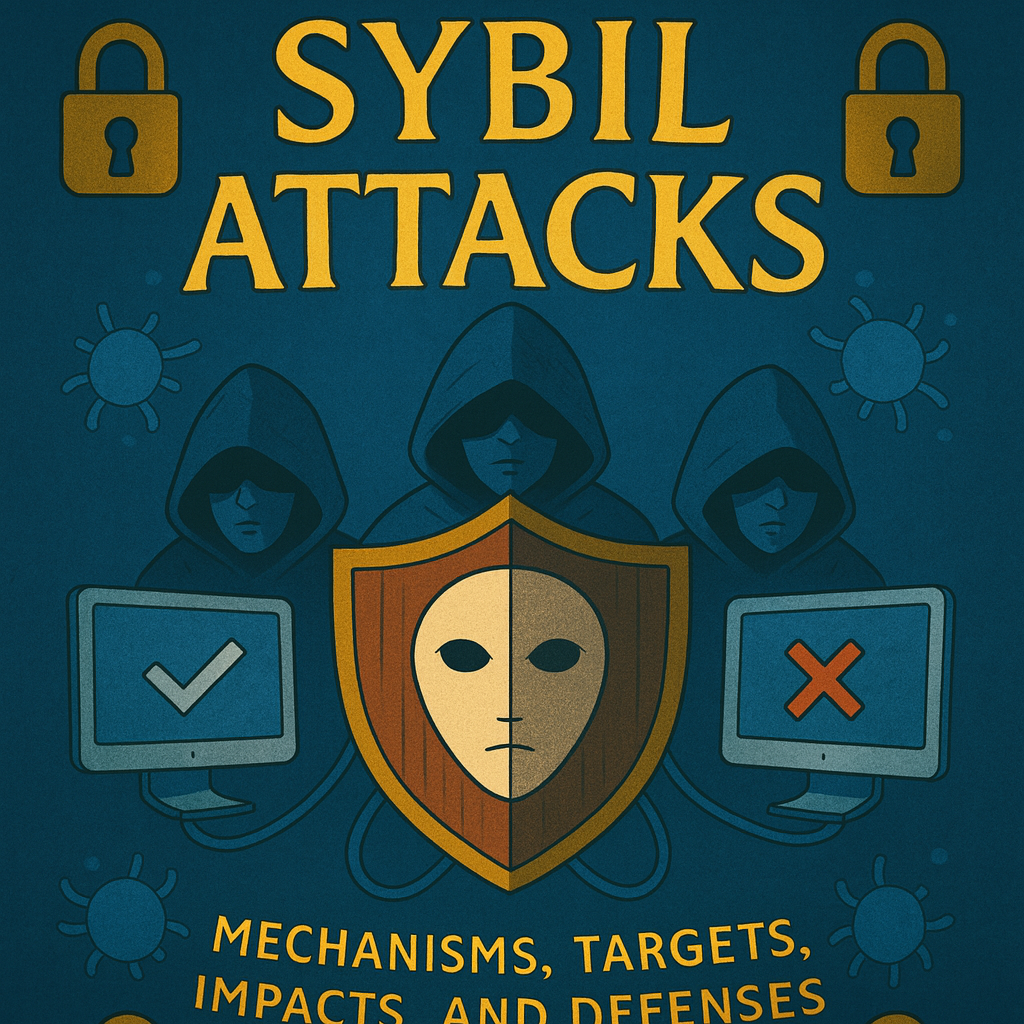
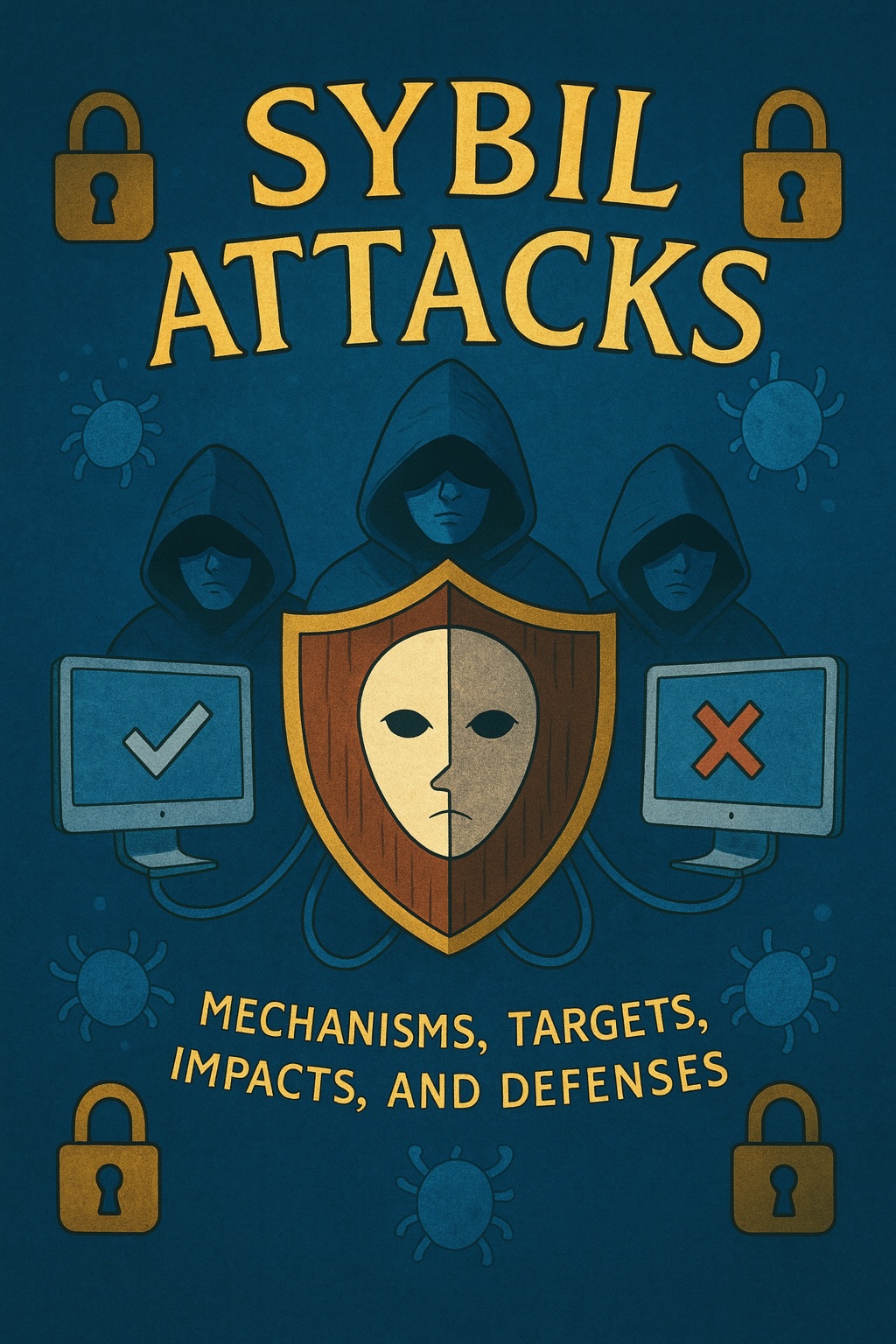
Sybil Attacks in Cybersecurity: Mechanisms, Targets, Impacts, and Defenses
•FEATURE, COLUMN, NEWS, BRANDS
A Sybil attack represents a significant and pervasive security threat within the domain of cybersecurity, particularly impacting distributed and decentralized systems.1 Fundamentally, it is an attack wherein a single malicious entity illegitimately creates and operates multiple fictitious identities simultaneously within a network or system.4
#NEWS
Sybil Attacks in Cybersecurity: Mechanisms, Targets, Impacts, and Defenses
I. Introduction to Sybil Attacks in Cybersecurity
A. Defining the Sybil Attack Phenomenon
A Sybil attack represents a significant and pervasive security threat within the domain of cybersecurity, particularly impacting distributed and decentralized systems.1 Fundamentally, it is an attack wherein a single malicious entity illegitimately creates and operates multiple fictitious identities simultaneously within a network or system.4 These fabricated identities, often referred to as "Sybils," "Sybil nodes," or "Sybil accounts," are presented to the system and its legitimate participants as distinct and independent entities, despite being controlled by a single adversary.2 The National Institute of Standards and Technology (NIST) concisely defines it as a cybersecurity attack where an attacker creates multiple accounts and pretends to be many persons at once.18
The primary objective behind launching a Sybil attack is to undermine the authority, reputation system, or operational integrity of the targeted network by gaining a disproportionately large influence.4 The multitude of fake identities serves to amplify the attacker's power, allowing them to subvert mechanisms that rely on the assumption that each participant controls only one identity.6 A successful attack grants the adversary the ability to perform unauthorized actions, manipulate system behavior (such as voting outcomes or consensus), disrupt services, or compromise data integrity.1
The term "Sybil attack" derives its name from the 1973 book Sybil, which documented the case study of Sybil Dorsett, a woman diagnosed with dissociative identity disorder (formerly multiple personality disorder).5 This nomenclature, suggested by Brian Zill and first discussed in a paper by John R. Douceur, both at Microsoft Research in the early 2000s, aptly captures the essence of the attack: a single entity presenting multiple, distinct "personalities" or identities to the network.2 This connection highlights the core deception tactic—one controlling entity masquerading as many independent participants to manipulate the system's perception and exploit trust mechanisms built on the assumption of unique identities.
B. Significance and Prevalence in Modern Networks
Sybil attacks constitute a fundamental and potent threat, particularly to the burgeoning landscape of decentralized and distributed systems.1 Systems such as peer-to-peer (P2P) networks, blockchain and distributed ledger technologies (DLT), online social networks (OSNs), Internet of Things (IoT) deployments, and wireless sensor networks (WSNs) are especially vulnerable because they often lack a central authority for rigorous identity verification and management.9
The prevalence of Sybil attacks is not merely theoretical; they have been observed and documented in numerous real-world systems. Online social networks like Facebook and Twitter have reported grappling with tens of millions of fake or Sybil accounts, which are used for spreading spam, malware, phishing attempts, and manipulating public opinion.48 Content voting and recommendation systems on platforms such as YouTube and Digg have been tampered with through Sybil tactics.51 Anonymity networks like Tor have experienced significant Sybil attacks aimed at de-anonymizing users or hijacking cryptocurrency transactions.5 Blockchain networks, despite their security features, are also targets, with notable attacks documented against Bitcoin, Ethereum Classic, Verge, Monero, Solana, and various cryptocurrency airdrops.5 Evidence indicates that launching large-scale Sybil attacks can be relatively inexpensive and efficient in many existing systems, further exacerbating the threat.14
The core vulnerability exploited by Sybil attacks stems from the abstraction of identity in digital systems. Unlike the physical world where an individual inherently occupies a single identity in a given context, digital systems represent participants through abstract identifiers like accounts, nodes, or cryptographic keys.15 Creating these digital abstractions is often trivial or low-cost. Systems that operate under the assumption—explicit or implicit—that one digital identity corresponds to one unique real-world entity become vulnerable when attackers violate this assumption by generating a multitude of identities controlled by a single source.13 Therefore, the attack fundamentally targets the gap between physical singularity and potential digital multiplicity, exploiting the mechanisms (or lack thereof) designed to enforce or approximate identity uniqueness in the digital realm. This makes Sybil attacks not merely a technical glitch but a challenge rooted in the socio-technical fabric of distributed systems, exploiting assumptions about user behavior, trust establishment, and identity management protocols within specific system architectures.7
C. Report Scope: Focus on Mechanisms, Targets, Impacts, and Defenses
This report provides an in-depth analysis of Sybil attacks within the context of cybersecurity. It adheres to the structure outlined by the initial query, systematically examining the following aspects:
Definition: Establishing a clear understanding of what constitutes a Sybil attack.
Mechanism: Detailing how attackers create and manage fake identities and deceive target systems.
Targeted Systems/Parties: Identifying the types of networks and platforms most vulnerable to Sybil attacks, with a specific focus on the parties affected.
Attacker Motivations and Goals: Exploring the various objectives driving adversaries to launch these attacks.
Impact: Analyzing the potential consequences of successful Sybil attacks on systems and their legitimate users.
Defense Mechanisms: Investigating the strategies and technologies employed to detect and mitigate Sybil attacks.
The analysis will concentrate on the cybersecurity implications, drawing upon established research and documented incidents to provide a comprehensive and technically grounded perspective, paying particular attention to the systems and user groups most frequently targeted by these attacks.
II. Anatomy of a Sybil Attack
Understanding the mechanics of a Sybil attack requires examining how attackers generate fraudulent identities and employ tactics to deceive systems and legitimate users.
A. Identity Forgery: Creation, Fabrication, and Theft Mechanisms
The foundation of a Sybil attack lies in the attacker's ability to present multiple identities to the network.2 In many distributed environments, particularly P2P networks, identity is treated as an abstraction; remote entities are recognized by their presented identities (e.g., node IDs, account names, public keys) without the system necessarily verifying a strict one-to-one mapping to a unique physical entity.20 This creates a many-to-one mapping potential (many identities controlled by one entity) that attackers exploit.20
The methods for acquiring these multiple identities vary:
Fabrication/Creation: In systems with low barriers to entry, attackers can simply fabricate numerous new identities.44 This can involve creating multiple user accounts, generating pseudonymous wallet addresses, spinning up virtual nodes, or assigning arbitrary identifiers (like random 32-bit integers if used for node IDs).1 Automation is key for large-scale attacks, using techniques like scripting for account creation, employing botnets (networks of compromised computers), or renting cloud virtual machines (VMs) to obtain diverse IP addresses and computing resources.8 In blockchain contexts, attackers might even deploy smart contracts that recursively create child contracts, each acting as a separate identity to bypass minting limits or gain voting power.8
Identity Theft/Compromise: In systems with stronger identity controls or where established reputation is valuable, attackers may resort to stealing or compromising legitimate identities.8 This could involve obtaining login credentials (e.g., email/password pairs through phishing or breaches 32), or even destroying/disabling legitimate nodes after stealing their identifiers to avoid detection.47 This is sometimes referred to as "identity replication" when the same stolen identity is used multiple times.47
The ease and cost associated with generating identities are critical factors determining a system's vulnerability.6 Systems that allow cheap, easy, and anonymous identity creation, or require minimal resources (CPU, bandwidth, stake) to participate, are inherently more susceptible.44 This spectrum of identity forgery methods, from simple fabrication to complex theft, means attackers can adapt their approach based on the specific security posture and identity management mechanisms of the target system.
B. Operational Tactics: Direct vs. Indirect Influence and Deception
Once an attacker controls multiple Sybil identities, they employ various tactics to exert influence and deceive the network:
Direct Attacks: In this mode, the Sybil nodes interact directly with honest nodes or participate directly in network protocols (e.g., voting, consensus).8 The legitimate nodes are typically unaware that they are communicating with multiple identities controlled by a single adversary.8 Examples include using numerous fake accounts to vote in online polls or consensus mechanisms, or flooding a P2P network with Sybil nodes to disrupt routing.44
Indirect Attacks: This approach is more subtle and involves Sybil nodes influencing the network through intermediaries.8 The attacker might compromise a smaller number of legitimate nodes and use them to relay malicious information or commands originating from the hidden Sybil nodes.24 Alternatively, Sybil nodes might interact only with other Sybil nodes or specific compromised nodes to artificially inflate reputations or manipulate network topology without directly contacting most honest participants.8 This indirection makes the attack harder to detect and trace back to the source.8 Examples include spreading misinformation through a network of seemingly independent but ultimately controlled accounts or using compromised nodes to vouch for Sybil identities.24
The distinction between direct and indirect tactics highlights a spectrum of attacker sophistication. Indirect attacks, while potentially requiring more effort to establish (e.g., compromising intermediaries), offer significantly greater stealth.8 This necessitates defense mechanisms capable of addressing both overt manipulation (like fake voting) and covert influence (like manipulating trust through intermediaries or spreading disinformation subtly).
Central to both tactics is deception: the attacker must successfully trick the system and its legitimate users into perceiving the Sybil identities as genuine, independent participants.1 This can involve fabricating realistic-looking profile information, mimicking the behavior patterns of legitimate users (at least initially to build trust), and exploiting weaknesses in the system's identity verification or reputation mechanisms.8 The core of the attack's effectiveness lies in this manipulation of the system's perception, making it believe it is interacting with a large, diverse set of users rather than a single controlling entity.
C. Exploiting Trust and Pseudonymity in Networked Systems
Sybil attacks fundamentally exploit the concepts of trust and pseudonymity that underpin many networked systems, especially decentralized ones:
Trust Exploitation: Many systems, from P2P networks to social platforms and reputation systems, rely on some form of trust—whether explicit (e.g., friend connections, vouching) or implicit (e.g., assuming nodes follow protocol).40 Sybil attacks break this trust.40 Attackers can create Sybil identities that appear trustworthy, perhaps by mimicking normal behavior initially or by having Sybil identities vouch for each other.8 They can directly manipulate reputation scores by having Sybil accounts provide fake positive reviews or ratings for themselves or negative ones for competitors.1 This subverts the very purpose of reputation systems, which is to foster trust and reliable interactions.1
Pseudonymity Exploitation: Systems that prioritize or allow pseudonymity—where users can participate without revealing their real-world identities—are particularly vulnerable.1 Blockchains, many P2P networks, and online forums often fall into this category.11 The attack thrives when the system readily accepts participation or input from identities that lack strong, verifiable links to a trusted entity or a unique real-world individual.20 The ease of creating these pseudonyms becomes the primary enabler of the attack.
III. Targeted Systems and Vulnerabilities
Sybil attacks are not confined to a single type of network; their applicability spans a wide range of distributed and online systems. The vulnerability often stems from the system's reliance on distributed trust, pseudonymous identities, or consensus mechanisms that can be overwhelmed by a large number of coordinated fake participants.
A. Peer-to-Peer (P2P) Networks
P2P networks represent the foundational battleground for Sybil attacks, as these systems inherently rely on collaboration among distributed, often pseudonymous peers with potentially weak identity verification mechanisms.3 The attack was first formally analyzed in the context of P2P distributed computing.1
File Sharing Networks (e.g., BitTorrent): Sybil attacks can disrupt file availability by introducing malicious nodes that provide false information about file locations or refuse to share data.22 Distributed Hash Tables (DHTs), commonly used for peer discovery in systems like BitTorrent's Mainline DHT, have been shown to be vulnerable to large-scale, low-cost Sybil attacks due to the ease of generating node IDs.1
Routing and DHTs: Attackers can inject Sybil nodes to disrupt routing protocols, manipulate routing tables, degrade path diversity, interfere with packet forwarding, and compromise overlay network maintenance.1 By controlling multiple identities along routing paths, an attacker can intercept, modify, or drop traffic, or make seemingly disjoint paths converge through a single malicious entity.1 Protocols like Kademlia and Chord are susceptible 5, although specific implementations like I2P's Kademlia or purpose-built DHTs like Whānau incorporate Sybil resistance features.5
Distributed Storage: Sybil attacks can undermine redundancy and data fragmentation mechanisms designed for fault tolerance and availability.2 A system might believe it is replicating data across multiple distinct nodes, while in reality, multiple copies are stored on Sybil nodes controlled by a single attacker, eliminating the intended redundancy.2
Anonymity Networks (e.g., Tor): These networks are prime targets. Attackers can run numerous Sybil relay nodes (entry, middle, or exit nodes).5 By controlling both the entry (ingress) and exit (egress) nodes of a Tor circuit, an attacker can potentially de-anonymize user traffic or perform man-in-the-middle attacks.5 Notable attacks involved large numbers of malicious Tor exit relays used to intercept traffic and rewrite Bitcoin addresses to steal funds.20
B. Blockchain and Distributed Ledger Technology (DLT)
Blockchains and DLTs are particularly attractive targets due to their potential high value and reliance on distributed consensus.11 While designed with security in mind, their often open and permissionless nature creates vulnerabilities.
Consensus Mechanism Manipulation: The primary goal in attacking blockchains is often to gain disproportionate influence over the consensus process.1 By controlling a sufficient number of Sybil nodes (representing voting power, hash rate, or stake), an attacker can attempt a 51% attack.5
Consequences of 51% Attacks: Gaining majority control allows the attacker to manipulate the blockchain's integrity.5 This includes:
Transaction Censorship/Blocking: Preventing legitimate transactions from being confirmed or included in blocks.5
Transaction Reordering: Modifying the order of transactions within blocks for malicious purposes.5
Double-Spending: Reversing the attacker's own transactions after they appear confirmed, allowing them to spend the same cryptocurrency multiple times.5
Block Withholding/Network Stalling: Refusing to propagate or accept valid blocks, potentially halting the network.25
Airdrop Exploitation: Attackers create numerous fake wallets/accounts ("airdrop farming") to unfairly claim a large portion of tokens distributed during airdrop events, diluting the value for legitimate participants and potentially damaging the project's reputation.23 Examples include incidents involving Optimism, Arbitrum, and zkSync airdrops.23
Specific Examples: Attacks have targeted various blockchains, including Bitcoin (voting manipulation, IP harvesting 5), Ethereum Classic (repeated 51% attacks, double-spending, millions stolen 11), Verge (51% attack wiping 200 days of transaction data 8), Monero (attempted de-anonymization, IP address linking 21), and Solana (theft via vulnerability exploitation 23).
C. Online Communities and Social Networks (OSNs)
OSNs are frequent targets due to their reliance on user-generated content, social connections, and often weak identity verification processes.
Reputation System Subversion: Attackers create fake accounts (sometimes called "sockpuppets" in this context 20) to manipulate reputation scores, post fake reviews (positive for themselves, negative for competitors), or artificially inflate the perceived popularity of content or users.1 "Elite Sybil attacks" specifically recruit highly-rated organic accounts to post convincing fake reviews.86
Misinformation and Disinformation: Sybil accounts are potent tools for spreading false or misleading information, creating a false sense of consensus or amplifying specific narratives.3 This can be used for political manipulation, stock market manipulation (pump-and-dump schemes 24), or damaging reputations.32
Spam, Phishing, and Malware: Fake accounts are used to distribute unsolicited messages (spam), lure users into revealing credentials (phishing), or spread malicious software.3
Vulnerability Factors: OSNs are vulnerable due to ease of account creation, reliance on user-reported trust (friending), and the difficulty in distinguishing genuine from fake profiles based solely on behavior or limited profile data.48 Graph-based defenses assume limited "attack edges" (links between Sybils and honest users), but studies show attackers can achieve high friend request acceptance rates, challenging this assumption.50
D. Reputation Systems
Reputation systems, designed to build trust in online interactions (e.g., e-commerce ratings, P2P file quality), are inherently primary targets for Sybil attacks, as subverting them is often the direct goal.1
Score Manipulation: Attackers use Sybil identities to artificially inflate their own reputation scores (e.g., fake positive reviews on e-commerce sites 13) or deflate the scores of competitors (e.g., slander attacks with fake negative feedback 1).
Trust Erosion: Successful manipulation erodes user trust in the reputation system itself, diminishing its value and potentially harming the platform's credibility.1
Vulnerability Factors: Systems are vulnerable if reputation can be easily gained by new identities, if interactions between Sybil identities are counted towards reputation, or if the cost of creating identities is low compared to the benefit of manipulating reputation.20
E. Online Voting Platforms
Systems that rely on voting mechanisms, whether for political polls, content ranking, or decentralized governance (e.g., DAOs), are susceptible to Sybil attacks aiming to manipulate outcomes.2
Vote Manipulation: By controlling a large number of Sybil identities, each potentially casting a vote, an attacker can overwhelm the votes of legitimate participants, effectively stuffing the ballot box.20 This can sway online polls, distort content rankings (e.g., Digg 51), or hijack governance decisions in DAOs.8
Compromising Integrity: Such manipulation undermines the perceived fairness and legitimacy of the voting process, eroding trust in the platform or organization conducting the vote.13
Vulnerability Factors: Systems are vulnerable if they lack robust mechanisms to ensure "one person, one vote" or if the cost/difficulty of creating voting-eligible identities is low.44
F. Wireless Sensor Networks (WSNs) / Internet of Things (IoT) / VANETs
These networks, often characterized by resource-constrained devices, wireless communication, and dynamic topologies, face unique Sybil attack challenges.2
Routing Disruption: Sybil nodes can disrupt routing protocols (e.g., multipath routing, geographic routing, clustering protocols like LEACH) by advertising false locations or multiple paths that actually lead to the attacker, degrading reliability and efficiency.1
Data Aggregation Corruption: In WSNs where data from multiple sensors is aggregated, Sybil nodes can inject false sensor readings, skewing the aggregated results.40
False Data Injection (VANETs): In Vehicular Ad hoc Networks (VANETs), Sybil attackers can create fake vehicle identities to report false information, such as non-existent traffic jams (to divert traffic) or emergency vehicle statuses, potentially causing accidents or disrupting traffic flow.3 The presence of virtual Sybil vehicles can also create unsafe gaps in vehicle platoons.58
Specific Challenges: Resource constraints on legitimate nodes make some defenses (like complex computations) impractical.17 Wireless communication allows eavesdropping and easier identity spoofing.47 Mobility adds complexity to location-based defenses.41
G. Cloud Computing / Federated Learning
Emerging paradigms like cloud computing and federated learning (FL) also face Sybil threats.
Detection Challenges: The loosely coupled and dynamic nature of cloud environments can make Sybil detection difficult, as nodes may lack complete network knowledge.14
Federated Learning Attacks: In FL, where distributed clients train a shared model without sharing raw data, Sybil attacks pose a significant threat.56 An attacker controlling multiple Sybil clients can:
Poison the Global Model: Inject malicious updates designed to degrade the global model's performance or introduce backdoors.56
Bypass Defenses: Coordinate updates from Sybil clients to appear similar, potentially evading outlier detection mechanisms designed to catch individual malicious clients.56
Exploit Dynamic Environments: The joining and leaving of clients in dynamic FL settings complicates defenses that rely on historical update information for similarity calculations.56
H. Underlying Vulnerability Factors
Several core factors contribute to a system's susceptibility to Sybil attacks. The cost of identity creation is paramount; systems where identities are cheap and easy to generate are highly vulnerable.6Anonymity and pseudonymity, while desirable for privacy, inherently lower the barrier for attackers to create multiple untraceable identities.5Decentralized control means there's often no single authority to rigorously vet identities.7 Finally, weak or easily manipulated reputation systems provide fertile ground for Sybil attackers to gain undue influence.44 The interplay of these factors determines the specific attack surface of any given system.
IV. Attacker Motivations and Goals
The motivations behind launching Sybil attacks are diverse, ranging from seeking disproportionate control and disrupting services to financial gain and information manipulation. Understanding these goals is crucial for designing effective defenses.
A. Disproportionate Influence and Control
A primary motivation is to gain an unfair level of influence or control over the target system's operations or decision-making processes.1 By creating a large number of seemingly independent identities, the attacker aims to amplify their voice or power within the system. This is particularly relevant in systems employing voting mechanisms, such as:
Consensus Mechanisms: In blockchains, attackers aim to control enough nodes (hash power in PoW, stake in PoS) to manipulate consensus, often targeting a 51% majority.5
Governance Voting: In Decentralized Autonomous Organizations (DAOs) or other systems with on-chain/online voting, Sybil identities can be used to out-vote legitimate users, pass malicious proposals, or block legitimate ones.2
Content Ranking/Polls: Sybil accounts can manipulate online polls or content ranking systems (like on Digg or YouTube) by casting numerous fake votes.41
B. Service Disruption and Denial of Service (DoS)
Another common goal is to disrupt the normal functioning of the targeted service or deny access to legitimate users.
Blocking Users/Transactions: By gaining sufficient influence (e.g., controlling a majority of nodes), Sybil attackers can refuse to relay or validate legitimate transactions or blocks, effectively blocking users from participating in the network.5
Network Flooding: Attackers can use Sybil nodes to flood the network with excessive traffic, spurious requests, or false data, overwhelming network resources (bandwidth, processing power) and causing congestion, performance degradation, or even complete outages (DoS).13 This can also lead to resource exhaustion.9
Network Isolation (Eclipse Attacks): Sybil nodes can be strategically positioned to surround and isolate a target node from the rest of the network, preventing it from receiving valid information and potentially feeding it false data.8
C. Manipulation of Reputation and Trust
Sybil attacks are intrinsically linked to the subversion of reputation and trust systems.1
Inflating/Deflating Scores: Attackers create Sybil accounts to artificially boost their own reputation (e.g., fake positive reviews, self-transactions 1) or damage competitors' reputations (e.g., fake negative reviews, slander attacks 1).13
Exploiting Trust: By creating identities that appear legitimate or gain positive reputation through fabricated interactions, attackers mislead other users into trusting them, potentially granting them unwarranted privileges or access.7
D. Information Control and Censorship
Controlling the flow of information or censoring specific content or users is another key motivation.
Spreading Misinformation/Disinformation: Sybil accounts are ideal vectors for disseminating false narratives, propaganda, rumors, or fake news at scale, potentially influencing public opinion, market sentiment, or elections.3 This can create a false sense of community consensus.11
Information Flow Control: By controlling key nodes or a large number of nodes, attackers can manipulate which information gets propagated through the network.5
Censorship: Attackers can use their amplified influence to block specific users, transactions, or content from the network, effectively implementing censorship.5
E. Financial Gain
Direct financial profit is a significant driver for Sybil attacks, especially in the context of cryptocurrencies and online markets.
Double-Spending: A primary goal of 51% attacks on blockchains is to enable double-spending, where the attacker reverses their own confirmed transactions to reclaim spent funds.5
Theft and Payment Hijacking: Attackers use Sybil nodes to intercept communications or manipulate network traffic to steal funds, such as the Tor attacks that rewrote Bitcoin wallet addresses in transit.11
Market Manipulation (Pump-and-Dump): Sybil accounts on social media can be used to artificially inflate demand for a cryptocurrency ("pump"), allowing the attacker to sell their holdings at a high price before the value crashes ("dump").24
Airdrop Farming: Creating numerous fake identities to claim a disproportionate share of free token distributions (airdrops).23
Unfair Resource Allocation: Gaining control over resource allocation mechanisms to benefit the attacker's identities.20
F. Privacy Violations
Compromising user privacy is another potential objective, often targeting anonymity systems.
De-anonymization: By controlling a significant number of nodes (especially entry and exit points) in anonymity networks like Tor, or by exploiting protocol weaknesses as attempted in Monero, attackers aim to link user activities or transactions back to their real IP addresses or identities.5
Data Harvesting: Sybil nodes can be used to monitor network traffic and collect sensitive user data or IP addresses passing through them.5
The decision to launch a Sybil attack can also be viewed through the lens of rational actors performing a cost-benefit analysis.68 If the perceived reward or value of achieving a malicious objective (e.g., financial gain from double-spending, influence gained from manipulating a vote) outweighs the cost and risk of creating and operating the necessary Sybil identities (e.g., hardware costs, electricity, stake, potential penalties, detection risk), a rational attacker may choose to proceed.68 Defense mechanisms often aim to increase this cost or decrease the potential benefit to deter such attacks.
V. Impact and Consequences
Successful Sybil attacks can have severe and wide-ranging consequences for the targeted systems and their legitimate users, undermining the core principles of security, fairness, and trust upon which these systems often rely.
A. Network Disruption and Performance Degradation
Sybil attacks can directly impair the operational stability and performance of networks.
Service Disruption/Outages: By flooding the network with traffic from numerous fake identities or by gaining control over critical functions like block propagation, attackers can slow down, disrupt, or even cause complete outages of the targeted service.5 This can manifest as delayed transactions, inaccessible services, or network partitions.8
Network Congestion and Resource Exhaustion: The sheer volume of Sybil nodes or the traffic they generate can overwhelm network bandwidth, processing capabilities of legitimate nodes, or storage resources, leading to congestion and degraded performance for everyone.9 This excessive demand can exhaust the resources of honest participants.9
Routing Instability: In networks relying on distributed routing (P2P, WSNs, VANETs), Sybil nodes can inject false routing information, create routing loops, or make reliable path discovery difficult, leading to inefficient or failed communication.1 Redundancy mechanisms like multipath routing can be defeated if seemingly diverse paths are routed through the same Sybil attacker.1
Compromised Fault Tolerance: Systems designed for fault tolerance often rely on redundancy, assuming failures are independent. Sybil attacks break this assumption, as multiple Sybil identities controlled by one entity represent a single point of failure. This weakens or negates the effectiveness of fault-tolerant schemes.9
B. Compromised Data Integrity and Reliability
A core impact of Sybil attacks is the potential to compromise the integrity and reliability of the data managed by the system, particularly in blockchains and databases.
Data/Transaction Manipulation: Attackers controlling a sufficient number of Sybil identities can manipulate data records or blockchain transactions.5 This includes modifying transaction order, preventing valid transactions from being confirmed, inserting false data (e
Detecting Sybil Attacks in Cloud Computing Environments Based on Fail‐Stop Signature, accessed on April 23, 2025, https://www.mdpi.com/2073-8994/9/3/35
Enhancing Security in Social Networks through Machine Learning: Detecting and Mitigating Sybil Attacks with SybilSocNet - MDPI, accessed on April 23, 2025, https://www.mdpi.com/1999-4893/17/10/442
A Security Risk Assessment Method for Distributed Ledger Technology (DLT) based Applications: Three Industry Case Studies - arXiv, accessed on April 23, 2025, https://arxiv.org/html/2401.12358v1
Detecting and Preventing Sybil Attacks in Wireless Sensor Networks Using Message Authentication and Passing Method - PubMed Central, accessed on April 23, 2025, https://pmc.ncbi.nlm.nih.gov/articles/PMC4506806/
From Tweets to Threats: A Survey of Cybersecurity Threat Detection Challenges, AI-Based Solutions and Potential Opportunities in X - MDPI, accessed on April 23, 2025, https://www.mdpi.com/2076-3417/15/7/3898
The Cost of Sybils, Credible Commitments, and False-Name Proof Mechanisms - arXiv, accessed on April 23, 2025, https://arxiv.org/pdf/2301.12813
Improving Sybil Detection via Graph Pruning and Regularization Techniques - Proceedings of Machine Learning Research, accessed on April 23, 2025, http://proceedings.mlr.press/v45/Zhang15b.pdf
SybilExposer: An Effective Scheme to Detect Sybil Communities in Online Social Networks - Computer Science - New Mexico State University, accessed on April 23, 2025, https://www.cs.nmsu.edu/~misra/papers/ICC16.pdf
An efficient secure and energy resilient trust-based system for detection and mitigation of sybil attack detection (SAN) - PeerJ, accessed on April 23, 2025, https://peerj.com/articles/cs-2231/
Blockchain and Distributed Ledger Technologies for Cyberthreat Intelligence Sharing - arXiv, accessed on April 23, 2025, https://arxiv.org/html/2504.02537v1