Stay informed with the latest insights, trends, and updates from SolanaLink.
Featured Article
Latest Articles
dYdX-vs-Hyperliquid-Market-Maker-Programs
•FEATURE, COLUMN, NEWS, BRANDS
#NEWS
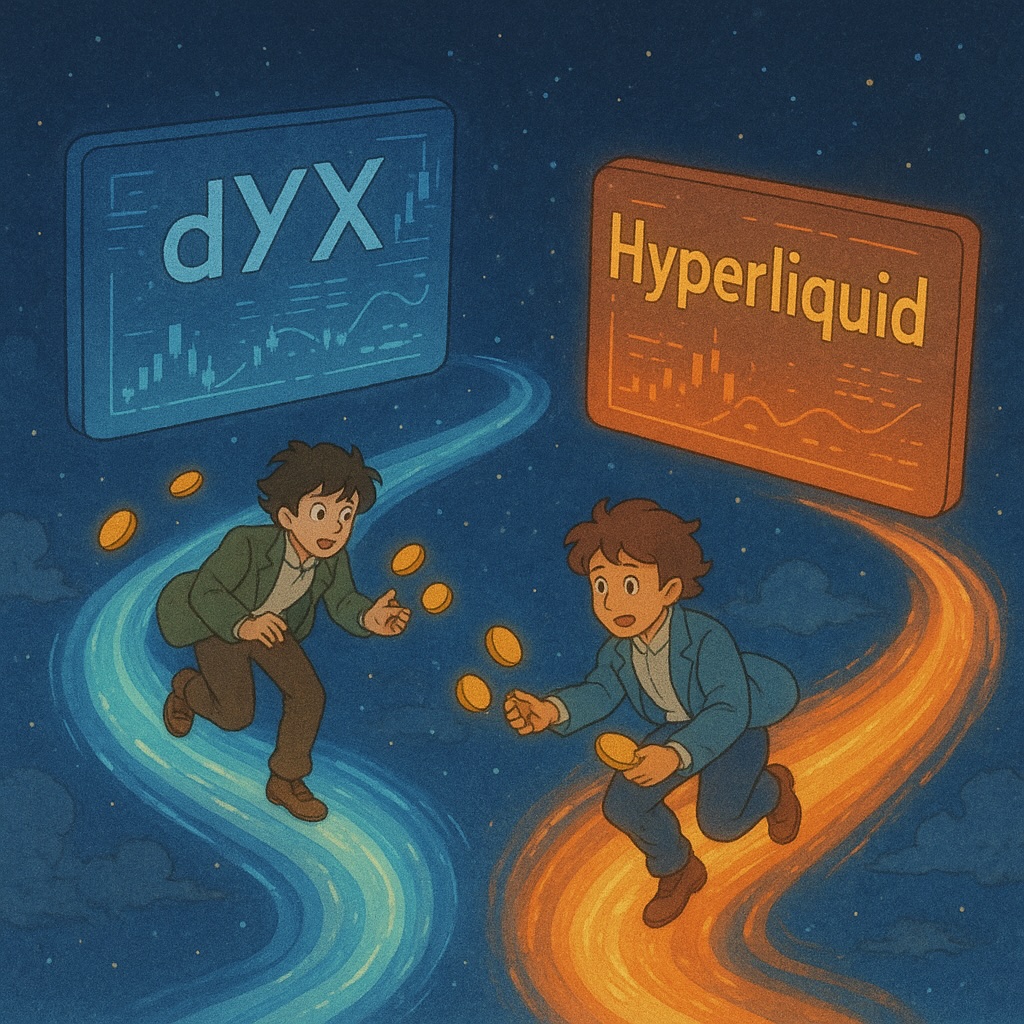
A Deep Research Comparison of dYdX and Hyperliquid DEX Incentive Programs for Market Makers
dYdX-vs-Hyperliquid
Executive Summary
The decentralized perpetuals exchange (DEX) sector has emerged as a primary battleground for innovation within decentralized finance (DeFi). At the heart of this competition lies the critical challenge of attracting and retaining professional market makers, the lifeblood of any high-performance, order book-based trading venue. This report provides an exhaustive comparative analysis of the market maker incentive programs of two leading platforms: dYdX and Hyperliquid. It deconstructs their respective strategies from first principles, connecting foundational architectural choices to divergent economic models and strategic philosophies.
The analysis reveals a fundamental dichotomy in incentive design. dYdX, in its v4 iteration, employs a complex, multi-layered, and actively managed framework. This system combines a baseline volume-tiered fee and rebate schedule with a sophisticated, seasonal "Launch Incentives Program" administered by Chaos Labs. The program utilizes a points-based formula that explicitly rewards not only filled maker volume but also the quality of resting liquidity, measured by spread and depth. This is supplemented by a third layer of targeted, strategic grants. This "intelligent design" approach provides the dYdX governance community with a powerful and adaptable toolkit for sculpting market microstructure and bootstrapping liquidity in specific markets. However, this flexibility comes at the cost of complexity, reduced predictability for market makers, and a reliance on the protocol's finite token treasury for funding.
In stark contrast, Hyperliquid adopts a philosophically minimalist and mechanistic approach. It explicitly eschews formal programs, bespoke deals, and discretionary rewards. Instead, its incentive structure is embedded directly into the protocol's core mechanics. The primary incentive is a simple, tiered maker rebate funded entirely and sustainably by taker fee revenue. This direct incentive is complemented by a powerful indirect mechanism: a significant portion of protocol fees are used to systematically buy back and burn the native HYPE token, creating a robust value accrual engine that aligns all ecosystem participants. This "emergent order" model prioritizes simplicity, capital efficiency, and predictability, offering a transparent and level playing field. Its sustainability is inherent, but it offers less granular control over liquidity shaping compared to dYdX's managed system.
For market makers, the choice between these platforms represents a strategic trade-off. dYdX appeals to sophisticated quantitative firms with the resources to model and optimize for its complex, programmatic rewards, offering potentially larger, albeit less predictable, token-based incentives. Hyperliquid is better suited for high-frequency and latency-sensitive traders who value execution speed, operational simplicity, and the immediate, deterministic capital efficiency of its instant rebate model. Ultimately, this report concludes that these two platforms represent distinct and powerful experiments in the ongoing quest for deep, sustainable, and decentralized liquidity, with their long-term success contingent on the relative merits of active market management versus pure mechanical efficiency.
1.0 The Evolving Role of Market Makers in Decentralized Perpetual Exchanges
The maturation of decentralized finance has seen a clear shift in derivatives trading towards architectures that can compete with the performance of centralized exchanges (CEXs). This evolution has placed a renewed emphasis on the foundational role of professional market makers, whose participation is the primary determinant of a platform's viability. The design of incentives to attract and retain these critical actors is therefore not merely a feature but a core strategic imperative.
1.1 The Primacy of Liquidity in Order Book DEXs
Market makers are financial entities, whether individuals or institutions, that provide liquidity to a market by continuously quoting both a buy price (bid) and a sell price (ask) for an asset.1 By standing ready to take either side of a trade, they ensure that other market participants can execute orders with minimal delay or adverse price movement, a phenomenon known as slippage.1 Their compensation is primarily derived from the bid-ask spread—the small difference between their buying and selling prices.3 In essence, market makers are the architects of market depth and stability, absorbing temporary imbalances in supply and demand and facilitating the crucial process of price discovery.1
This function is particularly vital for DEXs that employ a central limit order book (CLOB) model, such as dYdX and Hyperliquid. Unlike automated market maker (AMM) systems, which use liquidity pools and deterministic pricing formulas, order book exchanges replicate the familiar trading experience of traditional finance.5 This model offers traders precise control over execution prices through various order types (e.g., limit, stop-loss) and is the preferred structure for professional and high-frequency trading strategies.5 However, the efficacy of a CLOB is entirely dependent on the liquidity within it. An order book without a robust presence of market makers is "thin," characterized by wide spreads and low depth, making it incapable of handling large orders without significant slippage.9 Consequently, the central challenge for any aspiring order book DEX is to solve the cold start problem: attracting sufficient professional market-making capital to create a liquid and efficient trading environment that, in turn, attracts traders.
1.2 Architectural Imperatives for Market Making
The ability of a DEX to attract market makers is fundamentally constrained by its underlying technical architecture. Market-making strategies, especially high-frequency variants, require the ability to place, cancel, and update thousands of orders per second with minimal latency and cost.10 The foundational design choices made by dYdX and Hyperliquid in pursuit of this performance have profound and direct consequences for their respective incentive structures.
dYdX v4 is architected as a sovereign application-specific blockchain ("app-chain") built using the Cosmos SDK.11 It utilizes a Delegated Proof-of-Stake (dPoS) consensus mechanism (CometBFT) to secure the network. Its most critical design choice is the implementation of an
off-chain, in-memory order book.13 In this model, traders submit signed orders to the network's validators, who manage the order book off-chain. The matching engine is effectively decentralized across these validators. Only successfully matched trades are then committed to the blockchain state.5 This architecture allows for extremely high throughput for order placement and cancellation, as these actions do not incur gas fees or require immediate on-chain consensus, mirroring the experience of a CEX API.11
Hyperliquid, by contrast, is a bespoke Layer-1 blockchain built from the ground up with a singular focus on trading performance.8 It employs a custom consensus algorithm, HyperBFT, which is optimized for low latency and high throughput, reportedly capable of processing up to 200,000 orders per second with sub-second finality.8 This raw power enables Hyperliquid's defining feature: a
fully on-chain order book.18 Every action—placing an order, canceling an order, and executing a trade—is a transaction that is processed and recorded directly on the blockchain.13 This design offers unparalleled transparency and determinism, as the order book is an integral part of the canonical chain state.
This architectural divergence—off-chain versus on-chain order book—is the single most important factor shaping the two platforms' incentive philosophies. Because dYdX's resting orders exist in an off-chain state managed by validators, the protocol itself cannot deterministically and trustlessly verify the quality of a market maker's quoting behavior (e.g., their spread and depth) from the on-chain state alone. It only sees the end result: the trades. This technical reality necessitates the creation of a more complex, analytics-driven incentive layer that operates on top of the protocol. This layer, currently managed by Chaos Labs, must collect and analyze data on market maker activity to calculate and distribute rewards for desirable off-chain behavior, such as maintaining tight spreads.
Hyperliquid's architecture faces no such constraint. Since every order is an on-chain transaction, the protocol has perfect, real-time, and trustless knowledge of the entire order book state at all times. It does not need a supplementary analytics layer to measure liquidity. This architectural purity allows for a radically simpler incentive model. The protocol can forgo complex rewards for quoting behavior and instead focus its incentives entirely on the verifiable on-chain outcome of market making: filled trades. This leads directly to its simple maker rebate system, a mechanistic reward for a purely mechanical, on-chain event. The incentive programs are thus not arbitrary choices but direct and logical consequences of their foundational technical designs.
Table 1: Core Architectural Comparison (dYdX v4 vs. Hyperliquid)
Feature
dYdX v4
Hyperliquid
Implications for Market Makers
Blockchain Architecture
Sovereign App-Chain (Cosmos SDK) 11
Custom Layer-1 Blockchain 8
dYdX leverages the interoperable Cosmos ecosystem; Hyperliquid is a siloed but highly optimized environment.
Consensus Mechanism
CometBFT (Tendermint) 5
HyperBFT (HotStuff-inspired) 6
Both are high-performance, but HyperBFT is custom-built for order book throughput.
Order Book Implementation
Off-chain, Validator-Managed In-Memory 13
Fully On-Chain, part of L1 State 18
Critical Distinction: dYdX offers gasless order management but requires trust in validators for book integrity and a complex system to reward liquidity. Hyperliquid offers full transparency at the cost of requiring extreme L1 performance.
Order Finality & Cost
Gasless off-chain orders; on-chain settlement for trades 11
Sub-second on-chain finality for all actions; zero gas fees 17
Both provide a CEX-like experience. Hyperliquid's on-chain finality for every order offers greater determinism.
Decentralization Model
Permissionless Validator Set (60+ at launch) 12
Initially Permissioned Validator Set, expected to grow 8
dYdX launched with a more decentralized and distributed validator set, while Hyperliquid prioritized performance with a smaller, more controlled initial set.
Cross-Chain Bridge
IBC for Cosmos assets (USDC from Noble); CCTP for others 13
Validator-Managed Bridge from Arbitrum (Multisig-controlled) 13
dYdX relies on established, trust-minimized protocols (IBC). Hyperliquid's bridge introduces a higher degree of trust in its validator set and multisig governance.
2.0 The dYdX Approach: A Structured, Multi-Layered Incentive Architecture
dYdX has adopted a highly structured and actively managed approach to market maker incentives. This system has evolved significantly from its earlier iterations, moving from a blunt liquidity mining instrument to a sophisticated, multi-layered framework designed to precisely shape market quality and bootstrap the migration to its new sovereign chain.
2.1 From Unproductive Liquidity to Precision Incentives: The v3 to v4 Evolution
The incentive program for dYdX v4 is best understood as a direct response to the lessons learned from its predecessor, dYdX v3. The v3 protocol utilized a Liquidity Provider (LP) Rewards program that distributed a fixed amount of 1,150,685 DYDX tokens each 28-day epoch.22 Rewards were allocated to market makers based on a formula that scored them on parameters including uptime, two-sided depth, and bid-ask spread.23
While initially successful in attracting liquidity, this model faced significant community criticism over time. A key issue was its tendency to reward what became known as "unproductive liquidity".26 Market makers could optimize for the rewards formula by placing large orders with tight spreads but positioned far from the mid-price, where they were unlikely to be filled. This strategy earned them a high score and a large share of the DYDX emissions without contributing meaningfully to the trading experience for takers.26 This led to a situation where the protocol was incurring massive token emissions, creating sell pressure on DYDX, for liquidity that was not impactful. Furthermore, the program was often economically unsustainable, with the value of rewards paid out exceeding the fee revenue generated by the protocol, resulting in a net loss for the treasury.27
The migration to dYdX v4 on its own Cosmos chain marked a fundamental strategic pivot. The new incentive architecture was designed with two core principles in mind: sustainability and precision. To ensure sustainability, the native protocol trading rewards are now capped by the fees generated each block, preventing a scenario where rewards outpace revenue.29 To ensure precision, the blunt v3 formula was replaced by a more nuanced, multi-layered system designed to distinguish between and specifically reward
impactful liquidity—liquidity that is actually utilized by traders.29
2.2 The Foundational Layer: Volume-Tiered Fee Schedule and Maker Rebates
The baseline incentive for all market makers on dYdX v4 is the protocol's fee schedule. This structure is tiered, offering progressively better rates to users based on their 30-day trailing trading volume.30 The schedule is designed to heavily favor liquidity providers, with maker fees being significantly lower than taker fees across all tiers.
For the most active market makers, this incentive becomes explicit and powerful. The highest tiers of the fee schedule feature negative maker fees, also known as rebates. For instance, Tiers 6 through 9, which require a minimum of $125M in 30-day volume and a certain percentage of exchange market share, offer maker rebates ranging from -0.5 bps to as high as -1.1 bps.30 This means that for every trade where their resting order is filled, these high-volume market makers are paid a percentage of the trade's notional value. This foundational layer provides a constant, predictable, and mechanically simple reward for providing filled liquidity.
2.3 The Strategic Layer: The Launch Incentives Program
To accelerate the migration of users and liquidity from v3 and bootstrap its new chain, the dYdX community approved a supplemental $20 million Launch Incentives Program.33 Administered by the analytics firm Chaos Labs, this program is a more dynamic and discretionary tool that operates on top of the foundational fee schedule.
The program is structured into distinct "seasons," typically lasting about one month.32 At the end of each season, a pre-allocated pool of DYDX tokens is distributed to traders and market makers based on their performance, which is measured by a points system.35 This seasonal structure allows for iterative adjustments; the rules, pool sizes, and formulas can be fine-tuned by dYdX governance based on the results and needs observed in the previous season.36
Crucially, the program explicitly carves out a significant portion of its rewards for market makers. For example, a revised proposal for the program allocated 60% of the $1.5M monthly rewards pool ($900k) specifically to market makers.37 To be eligible for these rewards, market makers must typically meet a minimum activity threshold, such as accounting for over 0.25% of the total maker volume during a season, ensuring that the incentives are directed towards significant liquidity providers.34
2.4 Deconstructing the "Market Maker Points" Formula
The core of the Launch Incentives Program's strategic layer is its sophisticated formula for calculating "Market Maker Points." This formula is designed to reward a nuanced combination of both filled volume and the quality of resting liquidity, directly addressing the "unproductive liquidity" problem of v3. The formula is as follows 39:
pointsMaker:=∑iκi⋅V0.7⋅L0.3
Each component is designed to incentivize a specific, desirable behavior:
Volume Component (V0.7): This term rewards market makers based on V, the total dollar value of their maker orders that are filled in a given market (i) over a set period. It directly incentivizes providing liquidity that is consumed by takers. The use of an exponent less than 1 (0.7) is a critical feature. It creates a concave, non-linear reward curve, meaning that while rewards increase with volume, they do so at a diminishing rate. This design prevents the largest single market maker from dominating the rewards pool and encourages a more competitive and decentralized set of liquidity providers.22
Liquidity Component (L0.3): This is the program's primary tool for rewarding high-quality, resting liquidity. The liquidity score, L, is calculated by frequently sampling a market maker's order book depth at different price levels relative to the mid-price. Specifically, it measures the dollar value of liquidity within 25 basis points (L25), 50 basis points (L50), and 100 basis points (L100) of the mid-price. These values are then combined in a heavily weighted formula: Li=16×L25+4×L50+L100.38 This weighting scheme aggressively rewards liquidity that is placed very close to the current market price, as this is the most valuable liquidity for traders executing market orders. It directly incentivizes market makers to tighten their spreads and provide deep quotes where they are most impactful.
Market Multiplier (κi): This parameter acts as a strategic boost for specific markets. For less liquid, "long-tail" markets, this multiplier can be set to a value greater than 1 (e.g., 2), effectively doubling the points earned for activity in those markets.34 This provides a direct financial incentive for market makers to expand their operations beyond the most popular and competitive pairs like BTC-USD and ETH-USD, fostering liquidity across the entire platform.
2.5 The Ecosystem Layer: Strategic Grants and Partnerships
The third and most targeted layer of dYdX's incentive strategy involves direct engagement with professional market-making firms through its Grants Program. A prime example is the "DYDX Market Maker Initiative," which approved a 250,000 DYDX loan-option agreement with the firm Pulsar.40
Under this agreement, Pulsar receives the DYDX tokens for a 12-month period to provide dedicated liquidity for the DYDX token itself on major centralized exchanges like Binance, OKX, and Coinbase. The firm is bound by specific performance requirements, including 95% uptime and maintaining defined spread and depth parameters.40 This "surgical" approach is not designed to incentivize general on-chain liquidity but to solve a specific, strategic ecosystem need: ensuring the platform's native governance token is liquid and accessible on the venues where most users acquire it.
This three-tiered structure—foundational rebates, strategic seasonal programs, and surgical grants—provides the dYdX protocol with an unparalleled degree of flexibility and control over its liquidity landscape. It can use different tools to address different problems. However, this power comes with a significant trade-off in complexity. For a market maker, calculating their expected return on investment (ROI) is a formidable task. Their rewards from the seasonal program depend not only on their own performance but also on the total points generated by all other participants, the size of the seasonal rewards pool, the time-weighted average price (TWAP) of the DYDX token at the season's end, and, most critically, the risk that dYdX governance may alter the formula's parameters in the next season. This creates a system optimized for protocol-level control and market shaping, but at the expense of simplicity and reward predictability for the market makers it seeks to attract.
3.0 The Hyperliquid Philosophy: Incentivization Through Protocol Mechanics
Hyperliquid presents a stark philosophical counterpoint to dYdX's actively managed incentive structure. Its approach is defined by a commitment to simplicity, permissionless access, and economic sustainability, with incentives embedded directly into the core protocol rather than administered through external programs.
3.1 A Principled Stance: Rejection of Formal Programs and Bespoke Deals
The foundation of Hyperliquid's incentive philosophy is its explicit and consistent rejection of formal, designated market maker (DMM) programs and private arrangements. The platform's official documentation states unequivocally, "There is no DMM program, special rebates / fees, or latency advantages. Anyone is welcome to MM".41 This principle has been publicly reinforced by CEO Jeff Yan, who confirmed that Hyperliquid has declined "common practice" deals with market makers, such as private profit-sharing or equity investments, in favor of maintaining the protocol's integrity.42
This stance is deeply rooted in the project's origins. Hyperliquid was entirely self-funded, without venture capital backing, allowing it to pursue a "community first" ethos.18 The goal is to create a fair and level playing field where all incentives are derived from transparent, protocol-native mechanics, available to any participant without requiring special status or a negotiated agreement.
3.2 The Core Incentive: A Pure, Tiered Maker Rebate Model
The primary and most direct incentive for market makers on Hyperliquid is its tiered maker rebate system.6 This mechanism is funded entirely by the fees paid by liquidity takers, creating a self-sustaining economic loop.
The rebate a market maker receives is determined by their share of the total 14-day weighted maker volume on the platform.45 As a market maker's filled volume increases, they ascend through tiers that offer progressively more favorable maker fees, culminating in negative fees (rebates). The highest tier, for market makers contributing over 3.0% of the 14-day maker volume, offers a rebate of -0.003% (or -0.3 bps).10
This system is distinguished by several key characteristics that appeal to professional traders:
Continuous Payout: Unlike dYdX's seasonal rewards, Hyperliquid's maker rebates are paid out instantly and continuously on each filled trade, directly to the user's trading wallet.45 This provides immediate feedback and enhances capital efficiency, as rewards do not need to be claimed or waited for at the end of a long epoch.
Simplicity and Predictability: The reward is entirely deterministic. A market maker knows the exact rebate they will receive for any given trade based on their current, easily verifiable volume tier. There are no complex formulas, performance scores, or dependencies on the activity of other participants to calculate.
Inherent Sustainability: Because the rebates are funded by a portion of the taker fees, the system is economically sound by design. The protocol is not required to emit new, potentially inflationary tokens from a treasury to fund its core liquidity incentive.18
3.3 Indirect Incentives and Community-Owned Liquidity
Beyond the direct rebate, Hyperliquid employs powerful indirect incentives that align market makers with the broader health of the ecosystem.
Hyperliquidity Provider (HLP) Vault: HLP is a protocol-managed vault that executes automated market-making and liquidation strategies.6 It functions as a democratized liquidity pool; any user can deposit USDC into the HLP vault to passively earn a share of its profits, which are derived from market-making PnL and a portion of protocol trading fees.19 While not a direct incentive program for professional MMs, the HLP serves as a crucial source of baseline liquidity across all markets. It deepens the order books and stabilizes the trading environment, making the platform more attractive and less risky for all liquidity providers, including independent professional firms.48
The Assistance Fund and HYPE Token Buybacks: This is arguably the most powerful long-term incentive mechanism in the Hyperliquid ecosystem. A vast majority of the protocol's fee revenue (initially 97%, later increased to 99%) is directed to a protocol-controlled wallet known as the "Assistance Fund".45 The primary function of this fund is to systematically and continuously buy back the native HYPE token from the open market.49 This creates a relentless source of buying pressure on HYPE, directly linking the token's value to the trading volume and revenue of the exchange.
This design creates a self-reinforcing economic engine. High trading volume leads to high fee revenue, which funds more aggressive HYPE buybacks, which in turn reduces the circulating supply and supports the token's price. This makes holding or staking HYPE an attractive proposition for any long-term ecosystem participant, including market makers. It serves as a powerful indirect incentive that aligns their success with the success of the entire platform. Where dYdX uses token emissions to pay for specific quoting behaviors, Hyperliquid uses fee revenue to create a fundamental appreciation of its core ecosystem asset. The strategy is not to micromanage market maker behavior but to foster a hyper-efficient trading environment and a compelling native asset that benefits all participants in proportion to the platform's overall success.
4.0 Comparative Analysis: Structure, Efficacy, and Sustainability
A direct comparison of the dYdX and Hyperliquid incentive models reveals two fundamentally different approaches to solving the same problem: securing deep and reliable liquidity. The former relies on active management and programmatic complexity, while the latter champions passive mechanics and architectural simplicity.
4.1 Program Design: Formal & Discretionary vs. Embedded & Mechanistic
The most striking difference lies in the structure and administration of the incentives.
dYdX employs a formal and discretionary system. Its primary supplemental incentive, the Launch Incentives Program, is a distinct, time-bound initiative with a fixed budget and explicit start and end dates for each "season".33 The rules of engagement are defined by a complex, multi-variable formula that is subject to change. Crucially, dYdX governance, with significant input from its designated analytics partner Chaos Labs, retains the discretion to alter the program's parameters—such as the points formula, reward pool allocation, and market multipliers—from one season to the next.36 This makes the dYdX incentive landscape an actively managed environment.
Hyperliquid, in contrast, utilizes an embedded and mechanistic system. There are no formal "programs" or "seasons." The incentives, namely the maker rebates and the fee-to-buyback pipeline, are permanent features coded into the protocol's core logic.41 The rules are simple, transparent, and stable, changing only through significant protocol upgrades rather than seasonal adjustments. It is a passive, self-regulating system that operates without the need for continuous external management or discretionary decision-making.
4.2 Economic Models: Emissions-Based vs. Revenue-Funded
The economic underpinnings of the two incentive models are also fundamentally different, with significant implications for long-term sustainability.
dYdX relies heavily on an emissions-based model. The Launch Incentives Program is funded by a $20 million allocation of DYDX tokens from the community treasury.33 While the v4 protocol's native rewards are designed to be capped by fee revenue to avoid the net-negative state of v3, these large supplemental programs represent a direct expenditure of the protocol's finite token assets.27 Rewards are paid out in the native token, DYDX, which recipients may then hold or sell on the open market.
Hyperliquid operates on a purely revenue-funded model. The core market maker incentive—the rebate—is a direct redistribution of taker fee revenue, paid in the settlement asset (USDC).45 The powerful indirect incentive—the HYPE buyback—is also funded directly from protocol fee revenue.45 This creates a closed-loop economic system that does not depend on inflationary emissions or treasury spending for its primary incentive mechanisms.
4.3 Impact on Market Microstructure and Liquidity
Each model is designed to influence the behavior of market makers and, by extension, the quality of the market for traders.
dYdX's complex points formula is explicitly engineered to sculpt the order book. The heavy weighting of the liquidity component (L0.3) directly rewards market makers for maintaining tight spreads and providing deep liquidity near the mid-price, even if those orders are not filled.39 The intended result is a market microstructure that is highly favorable for takers, with minimal slippage for typical trade sizes. On-chain data and platform metrics suggest this approach has been effective, with dYdX consistently demonstrating significant market depth and over $1.4 trillion in lifetime volume.32
Hyperliquid's simple rebate model only rewards filled volume. It provides no direct incentive for maintaining deep, resting liquidity far from the mid-price. In theory, this could lead to thinner order books and higher slippage for very large trades. However, in practice, the platform's extreme technical performance (sub-second latency, zero gas fees) and resulting high trading volumes have organically attracted intense competition among high-frequency market makers.49 This competition naturally leads to tight spreads and deep liquidity at the top of the book. The HLP vault further supplements this by providing a constant baseline of liquidity across markets.20 The result is a market that has proven to be extremely liquid, with Hyperliquid rapidly surpassing dYdX in daily and all-time trading volume despite its more recent launch.54
4.4 Attractiveness to Market Maker Archetypes
The structural differences make each platform more appealing to different types of market-making firms.
dYdX is likely more attractive to large, sophisticated quantitative funds and institutional market makers. These firms possess the analytical and engineering resources to model the complex points formula, predict outcomes, and optimize their quoting strategies to maximize their share of the large DYDX reward pools. The formula's liquidity component (L0.3) also benefits firms that can deploy significant capital to provide deep, more passive liquidity. Furthermore, the existence of a formal grants program provides a direct channel for engagement and funding.40
Hyperliquid is ideally suited for high-frequency trading (HFT) firms and latency-sensitive algorithmic traders. For these participants, operational simplicity, predictable revenue, and raw execution speed are paramount. Hyperliquid's architecture provides CEX-level performance, while its instant, deterministic USDC rebates offer immediate capital efficiency without the overhead of modeling complex, token-based rewards.10 The permissionless, no-deals ethos also creates a transparently competitive arena that HFT firms often prefer.
While both platforms have designed powerful incentive systems, each approach carries a unique set of risks and vulnerabilities that market makers must carefully consider. These risks range from the potential for economic exploitation and questions of long-term sustainability to the uncertainties introduced by protocol governance.
5.1 Incentive Exploitability: Wash Trading and Sybil Resistance
Any system that rewards trading volume is a potential target for wash trading, a form of market manipulation where an entity trades with itself to create artificial volume and claim rewards.59
dYdX: The protocol explicitly states that one of its goals is to ensure "self-trading should not be profitable".30 Recognizing that its complex points system could be gamed, the dYdX Launch Incentives Program is backstopped by a sophisticated wash trading detection module developed by Chaos Labs.60 This system analyzes trading patterns, using graph analysis to detect collusive, cyclical trading among clusters of accounts that result in minimal net change in ownership. Trades flagged as suspicious by this algorithm are excluded from the final reward calculations, acting as a significant deterrent to inorganic activity.60
Hyperliquid: The platform's fully on-chain nature provides a high degree of transparency, but it is not immune to manipulation. The most prominent risks have appeared in low-liquidity, pre-launch markets. Incidents involving the JELLYJELLY and XPL tokens demonstrated that well-capitalized actors could engineer short squeezes by sweeping the thin order books, causing cascading liquidations and profiting from the extreme volatility.51 In response, Hyperliquid has implemented new safeguards, including a hard cap limiting a pre-launch market's mark price to 10 times its 8-hour exponential moving average and incorporating external perpetual market data to create more robust price signals.62 While its simple rebate model could also incentivize wash trading, the fact that a wash trader must pay a taker fee on one side of the trade acts as a natural economic brake on such activity.
5.2 Program Sustainability and Economic Viability
The long-term health of an incentive program depends on its economic model.
dYdX: The primary risk for dYdX is the sustainability of its token emissions. The Launch Incentives Program is funded from a finite community treasury. Continuous, large-scale reward programs exert sell pressure on the DYDX token as recipients—many of whom are market makers with no mandate to hold speculative assets—convert their rewards to stablecoins.37 This has been a point of contention within the dYdX community, with some members arguing that the programs represent an "erosion of DYDX tokens from the treasury" and that the return on investment is unclear, as trading volumes can disappear once incentives end.27 The v4 design, which caps native rewards by fees generated, is a crucial mitigation step, but the large supplemental programs remain a significant and potentially unsustainable long-term expense.
Hyperliquid: The platform's core incentive model is inherently sustainable. Maker rebates are a direct redistribution of revenue, not an expense from a treasury.45 The main economic risk factor is its reliance on a positive feedback loop for the HYPE token. The buyback model is exceptionally powerful in periods of high trading volume, as it translates directly into buying pressure for HYPE.47 However, in a prolonged bear market or a scenario with declining volume, the flywheel could work in reverse: lower volume would mean fewer fees, leading to reduced buybacks, which could negatively impact the token's value and overall ecosystem sentiment.64 Despite this cyclical risk, the model fundamentally avoids the direct inflationary pressure and treasury depletion risk associated with dYdX's emissions-based programs.
5.3 Governance and Parameter Risk
For market makers, who invest significant resources in developing and deploying strategies, stability in the rules of engagement is critical.
dYdX: Participants face considerable governance risk. The dYdX DAO has the authority to change virtually every aspect of the incentive program on a seasonal basis, including the points formula weightings (V vs. L), the market multipliers (κ), the total reward pool size, and eligibility thresholds.30 A market maker who invests heavily in building infrastructure to optimize for one season's formula may find their strategy significantly less profitable or even obsolete in the next. This creates a high degree of parameter uncertainty that must be factored into any long-term commitment to the platform.
Hyperliquid: The governance risk is substantially lower. While HYPE token holders can eventually propose and vote on changes to protocol parameters like fee structures, the platform's core philosophy and mechanistic design suggest a preference for stability and infrequent changes.17 The core rebate mechanism is less susceptible to the kind of frequent, granular tweaking seen in dYdX's seasonal points system. The primary risk would be a fundamental change to the fee tiers or the percentage of revenue allocated to the Assistance Fund, which would be a major and highly debated protocol-level decision.
Table 4: Risk Assessment Matrix
Risk Factor
dYdX Assessment & Mitigation
Hyperliquid Assessment & Mitigation
Wash Trading / Incentive Gaming
High Risk. The complex points system creates a large attack surface. Mitigation: Sophisticated, off-chain wash trading detection algorithm by Chaos Labs that disqualifies inorganic volume from rewards.60
Moderate Risk. Simple rebate model can be gamed, but taker fees act as a deterrent. Mitigation: Full on-chain transparency aids detection. The primary risk is market manipulation in thin markets, not pure wash trading.
Economic Sustainability
Moderate-High Risk. Reliance on finite DYDX treasury for supplemental programs creates emissions and sell pressure. Mitigation: Native v4 rewards are capped by fees. Governance can adjust program size based on ROI.27
Low Risk. Core rebate system is revenue-funded and inherently sustainable. Buyback model is cyclical but avoids inflationary emissions.45
Governance / Parameter Changes
High Risk. Incentive formula, budget, and eligibility are subject to frequent changes on a seasonal basis by the DAO, creating uncertainty for MMs.34
Mitigation: Transparent governance forum for discussion.
Low Risk. Core mechanics are stable and not designed for frequent adjustment. Changes would require significant protocol upgrades.42
Protocol / Smart Contract Risk
Moderate Risk. Audited by multiple top firms. The Cosmos SDK is battle-tested. Complexity of the off-chain/on-chain hybrid model introduces unique validator coordination risks.7
Moderate-High Risk. As a newer, bespoke L1, it is less battle-tested than Cosmos. Bridge contract is multisig-controlled, introducing a custodial trust assumption.8
Market Manipulation (e.g., Squeezes)
Low Risk. Deep liquidity in major markets and MEV-resistant architecture make manipulation difficult.7
High Risk (in thin markets). Demonstrated vulnerability to whale-driven short squeezes in pre-launch markets. Mitigation: New safeguards like mark price caps and use of external oracle data are being implemented.61
6.0 Conclusion and Strategic Outlook
The divergent paths taken by dYdX and Hyperliquid in designing their market maker incentive programs reflect a broader philosophical debate within DeFi about the best way to achieve deep, sustainable liquidity. The choice is between a system of active, intelligent design and one of passive, emergent order. The analysis of their structures, economic models, and inherent risks provides a clear framework for market makers to align their own strategies and capabilities with the platform that best suits their objectives.
6.1 Synthesizing the Trade-Offs: Complexity vs. Simplicity, Control vs. Efficiency
The core dichotomy can be summarized as follows:
dYdX offers control and adaptability through complexity. Its three-tiered incentive structure acts as a sophisticated toolkit for dYdX governance. It can precisely reward specific behaviors (like tight spreads in long-tail markets), surgically address ecosystem needs (like CEX token liquidity), and iteratively adjust its strategy based on market feedback. For market makers, this presents multiple, overlapping avenues for generating revenue: direct fee rebates, a large pool of programmatic token rewards, and the potential for bespoke grants. However, this system demands constant adaptation and introduces significant uncertainty regarding the long-term predictability of rewards.
Hyperliquid offers efficiency and predictability through simplicity. Its incentive model is not a "program" to be managed but an economic engine to be participated in. By focusing on a single, deterministic rebate and a powerful, protocol-wide value accrual mechanism, it removes complexity and ambiguity. For market makers, this provides a hyper-efficient and capital-friendly environment. The reward for a filled trade is known instantly and paid immediately. The trade-off is a lack of granular control; the protocol cannot easily incentivize liquidity in a specific new market beyond the organic pull of its trading volume.
6.2 Strategic Recommendations for Market Makers
The optimal choice of platform is not universal but depends on the specific archetype of the market-making firm.
For High-Frequency Trading (HFT) and Latency-Sensitive Firms:Hyperliquid presents a more compelling environment. Its bespoke L1 architecture, sub-second on-chain finality for all order book actions, and simple, deterministic rebate model are purpose-built for strategies that prioritize execution speed and minimize operational overhead. The immediate payout of USDC rebates provides superior capital efficiency compared to waiting for end-of-season token distributions.
For Large Quantitative and Institutional Firms:dYdX may offer a greater opportunity. These firms typically have dedicated research and analytics teams capable of modeling the complex points formula to maximize their share of the substantial DYDX reward pools. The formula's explicit reward for deep, resting liquidity (L0.3) is well-suited to strategies that can deploy large capital reserves. Furthermore, the existence of a formal grants program and the protocol's established reputation provide clearer pathways for institutional-level engagement.
For Emerging and Smaller Market Makers:Hyperliquid offers a lower barrier to entry and a more level playing field. Its "anyone is welcome" philosophy and simple, volume-based rebates are accessible to all participants. In contrast, dYdX's Launch Incentives Program, with its 0.25% total maker volume threshold, may effectively exclude smaller players from its most lucrative rewards, concentrating them among the largest firms.
6.3 Future Outlook: The Competitive Frontier of MM Incentives
The intense competition between dYdX and Hyperliquid, evidenced by the rapid shifts in market share and trading volume, suggests that the design of market maker incentives will remain a critical frontier of innovation.52 The current landscape presents two powerful but distinct models, each with its own strengths and weaknesses.
The long-term trajectory may involve a degree of convergence. As the dYdX ecosystem matures and its treasury emissions become a greater concern, the community may push for a simplification of its reward structures and a greater emphasis on sustainable, revenue-funded incentives—a trend already visible in governance forum discussions proposing to reduce programmatic rewards in favor of higher fixed rebates.26 Conversely, as Hyperliquid seeks to expand its market offerings into more exotic and long-tail assets, it may find that its purely organic, volume-driven model is insufficient to bootstrap initial liquidity. This could create pressure to introduce more targeted, dYdX-like mechanisms, such as market-specific multipliers or grants, to encourage early market makers.
For now, dYdX and Hyperliquid stand as compelling, large-scale experiments. One tests the hypothesis that liquidity can be actively engineered through complex, data-driven incentives, while the other tests whether a hyper-efficient, simple, and transparent economic engine is sufficient to let deep liquidity emerge organically. The outcome of this competition will not only determine the future leader in decentralized derivatives but will also provide invaluable lessons for the entire DeFi ecosystem on the art and science of building sustainable, liquid markets.